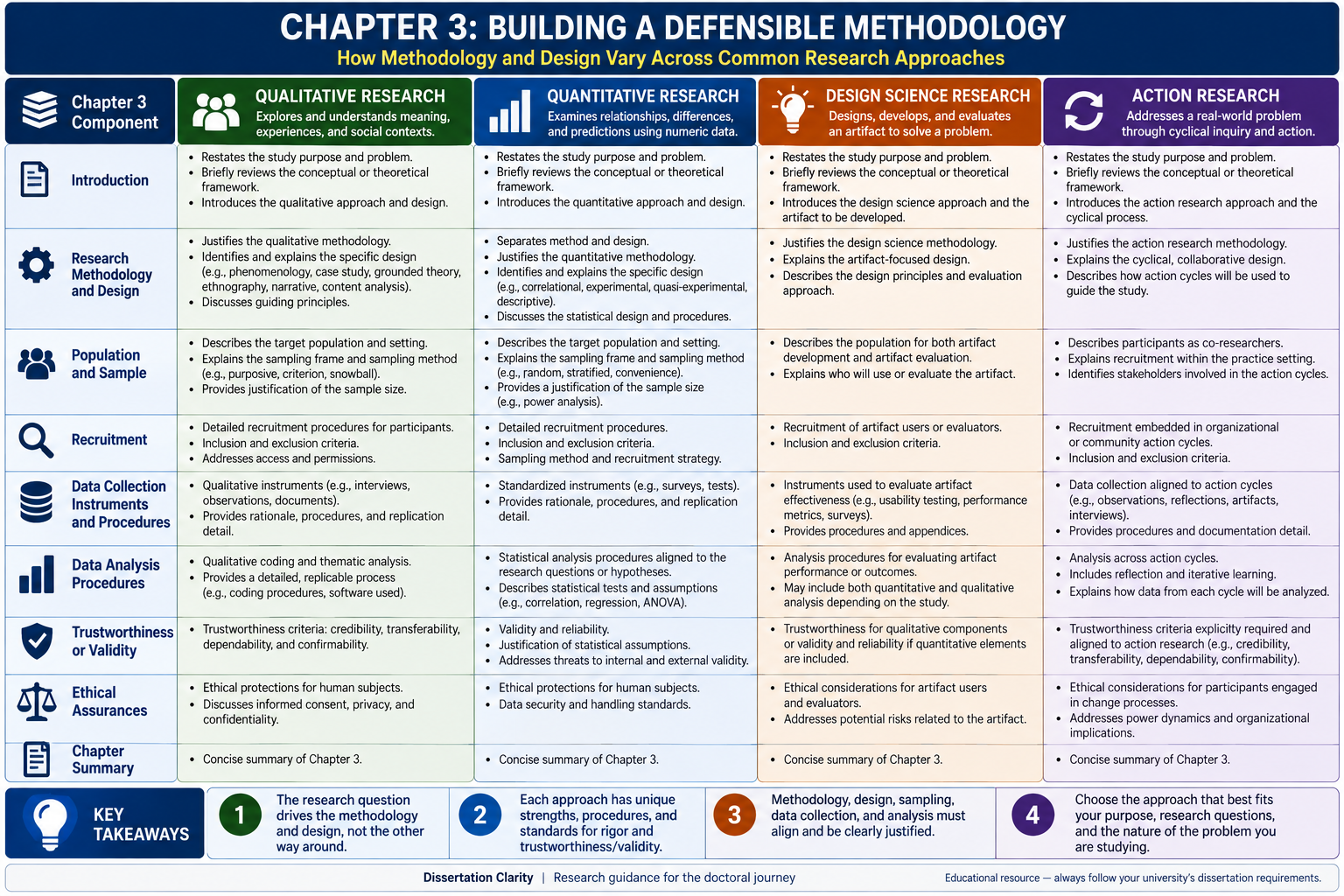
Chapter 3: Building a Defensible Methodology
Compare qualitative, quantitative, design science, and action research across the major components of Chapter 3.
Dissertation Clarity Resource Library
Use these original visuals, worksheets, matrices, and checklists to understand research decisions, strengthen alignment, and move through the dissertation process with greater clarity.
Visual Guides
Open any visual to view it at full size. These resources are institution-neutral; always apply your own university's current dissertation requirements.
Compare qualitative, quantitative, design science, and action research across the major components of Chapter 3.
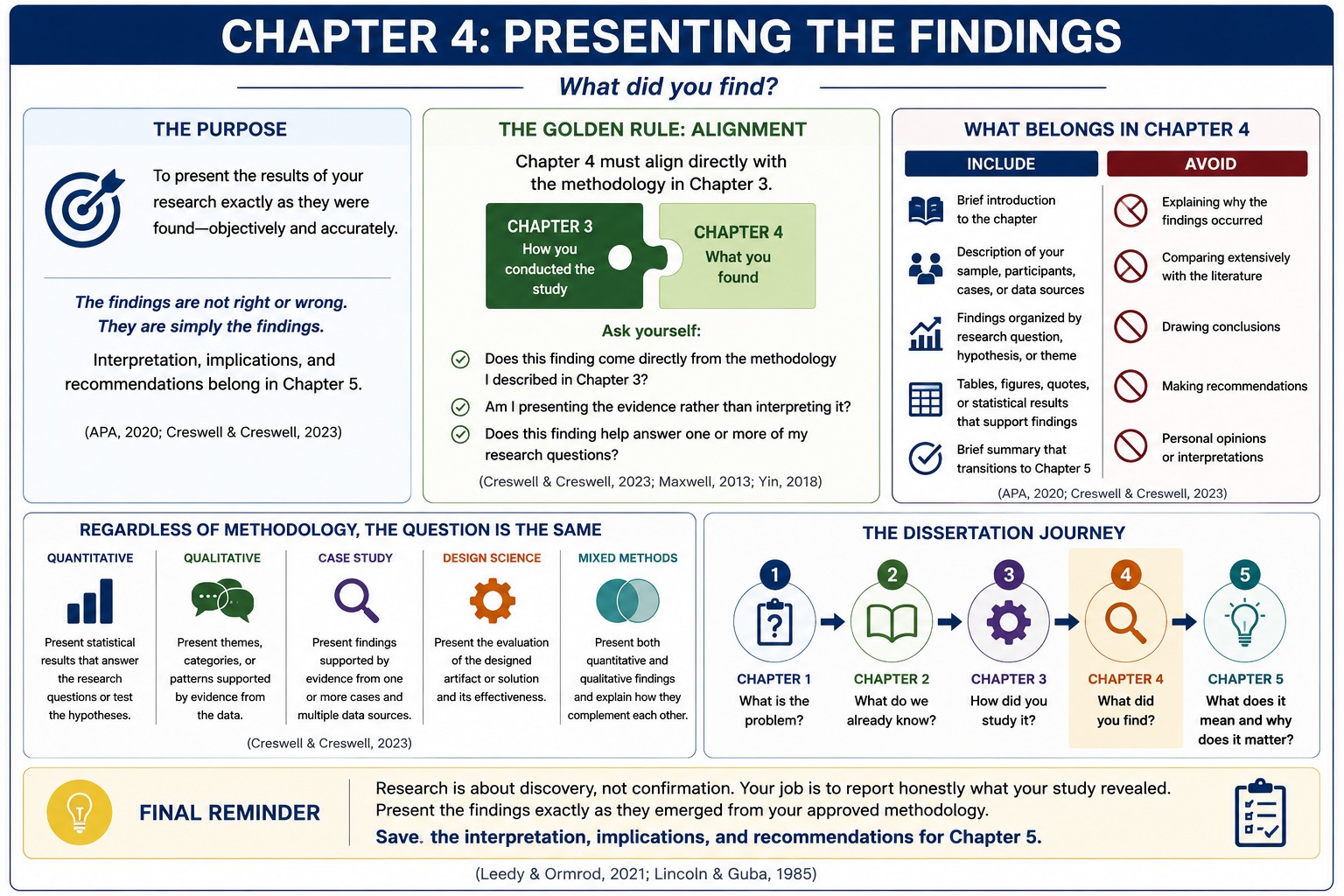
See what belongs in Chapter 4, how findings align with Chapter 3, and what should be reserved for Chapter 5.
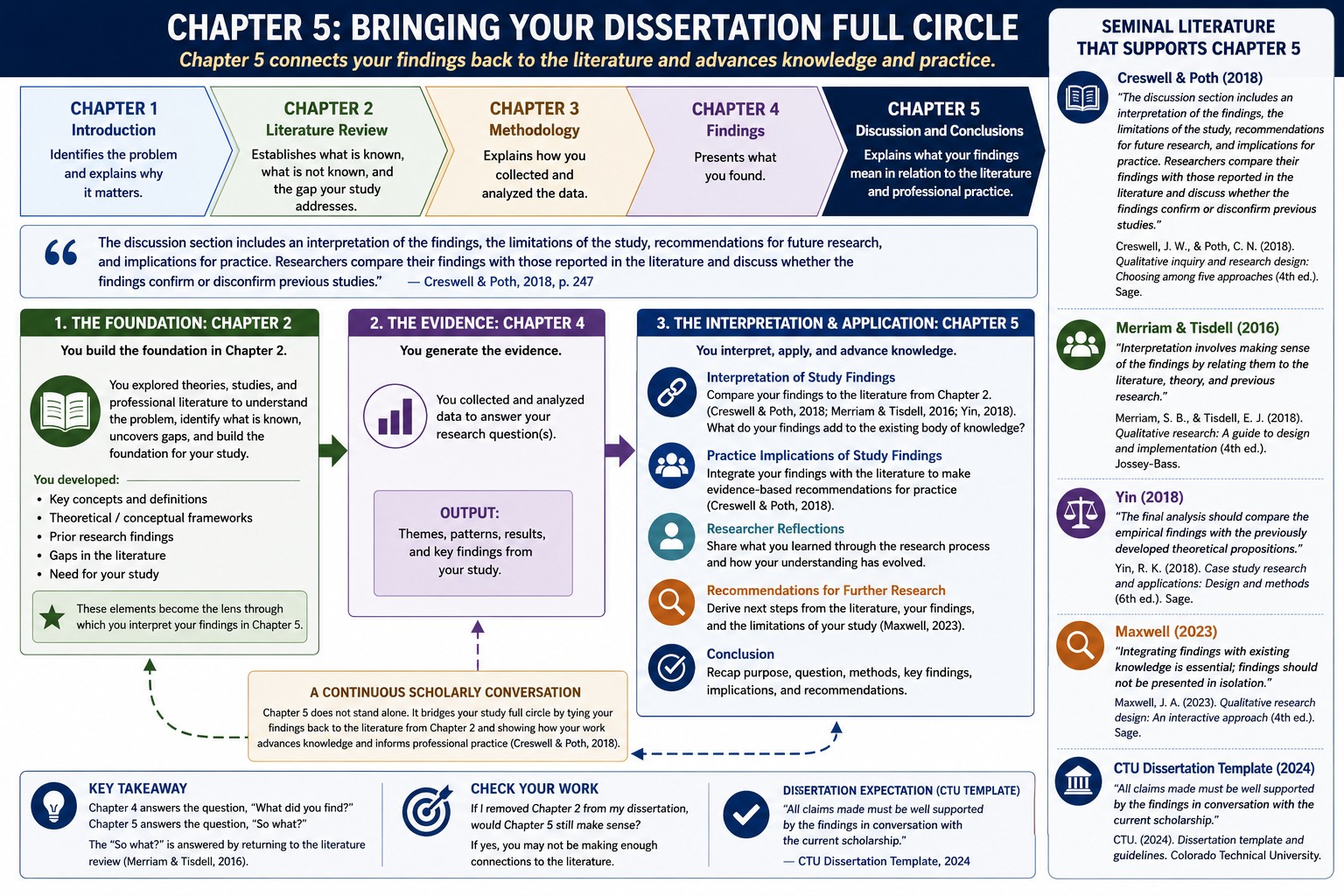
Connect findings back to the literature and move from evidence to interpretation, implications, recommendations, and conclusions.
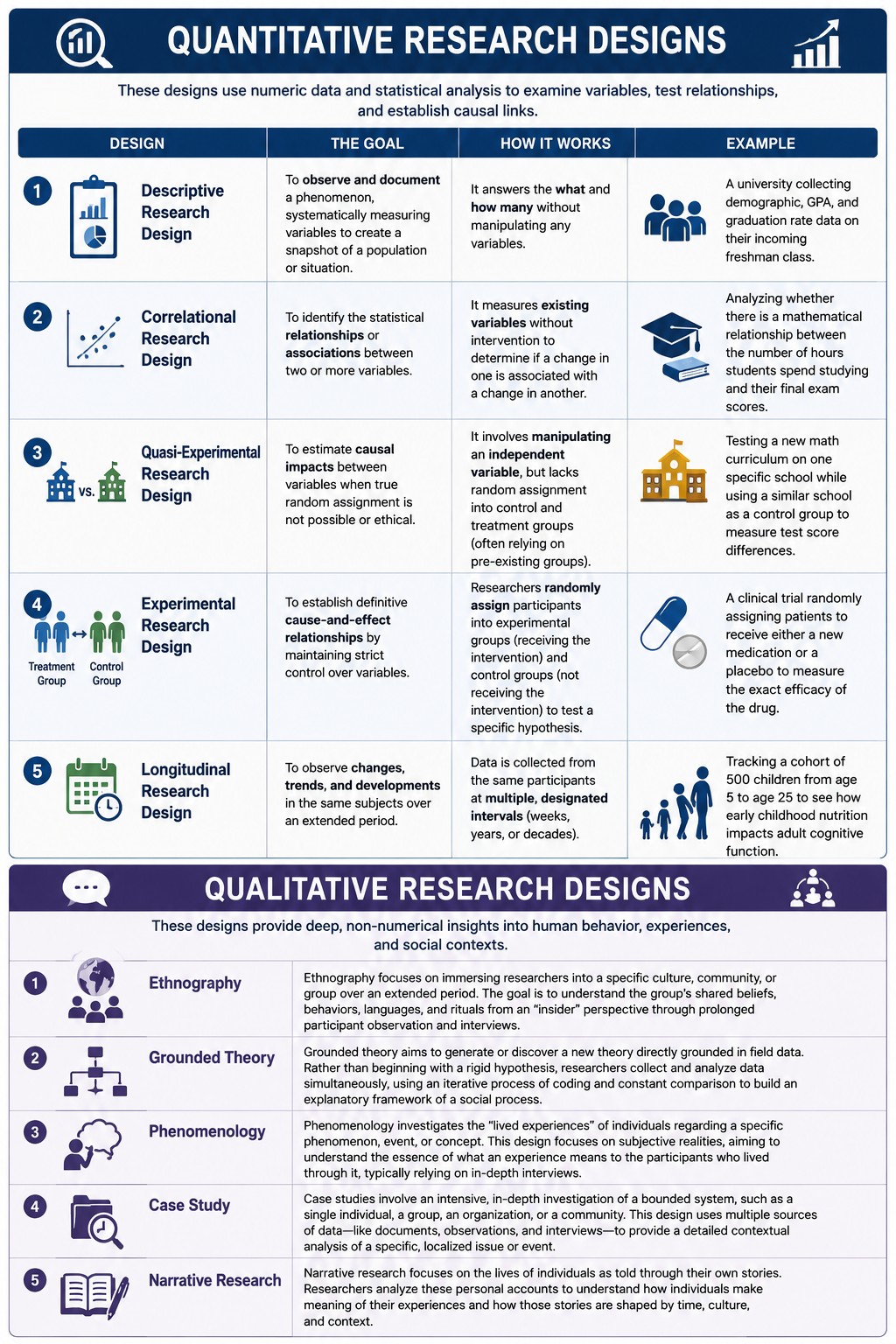
A quick-reference overview of common quantitative and qualitative designs and how they differ.
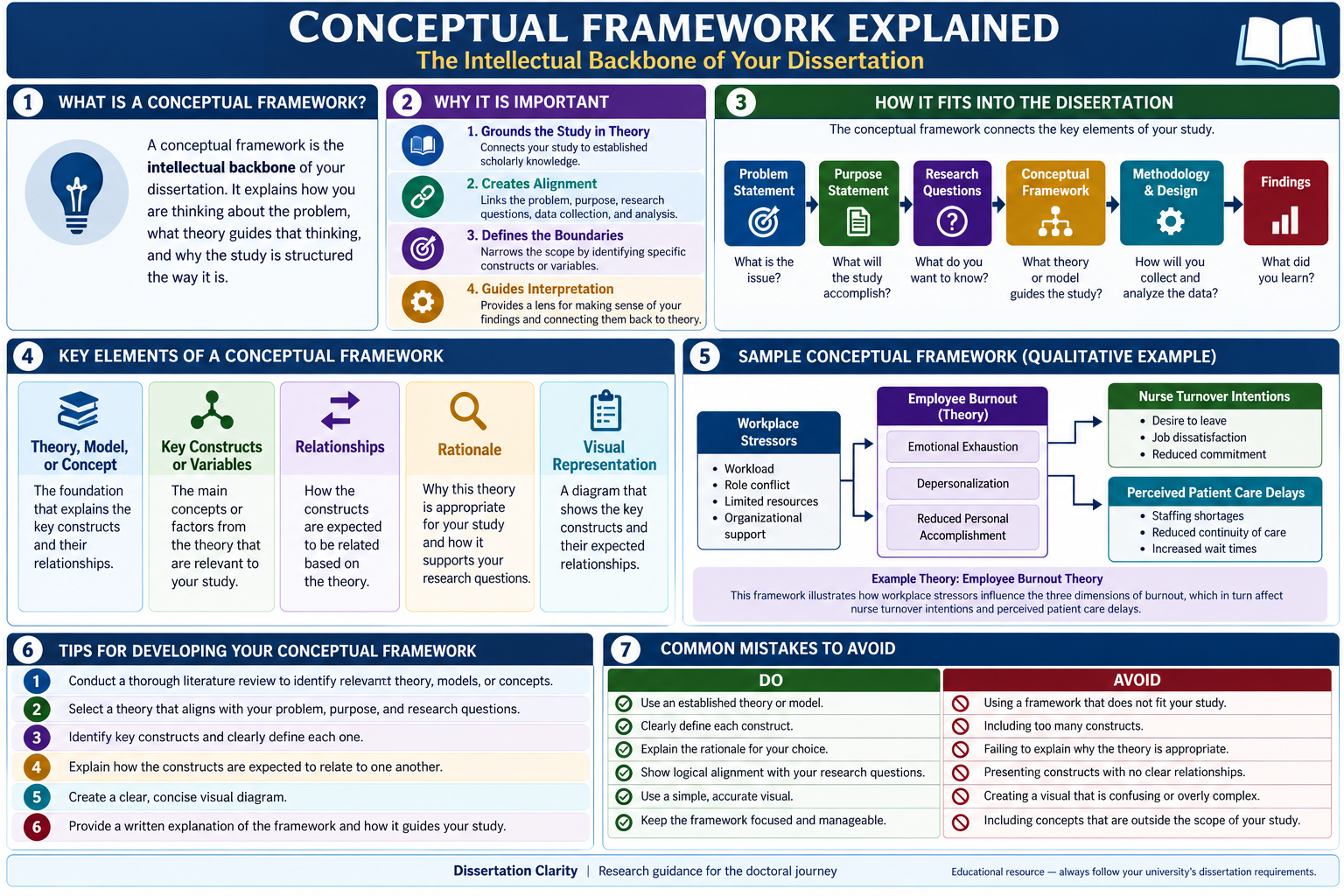
Understand the framework as the intellectual backbone of the study and see how it connects the major dissertation elements.
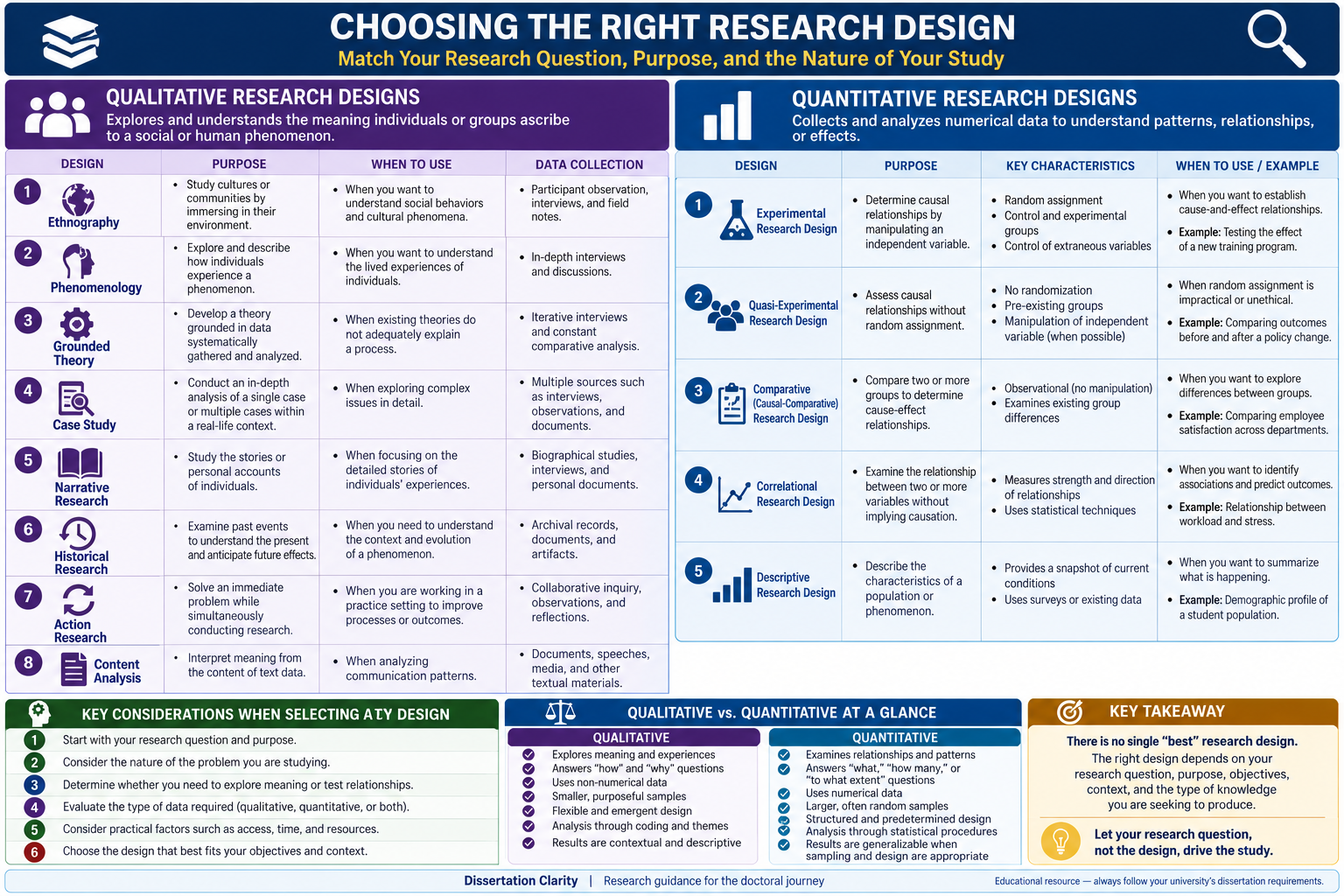
Match the research question, purpose, data needs, and study context to an appropriate qualitative or quantitative design.
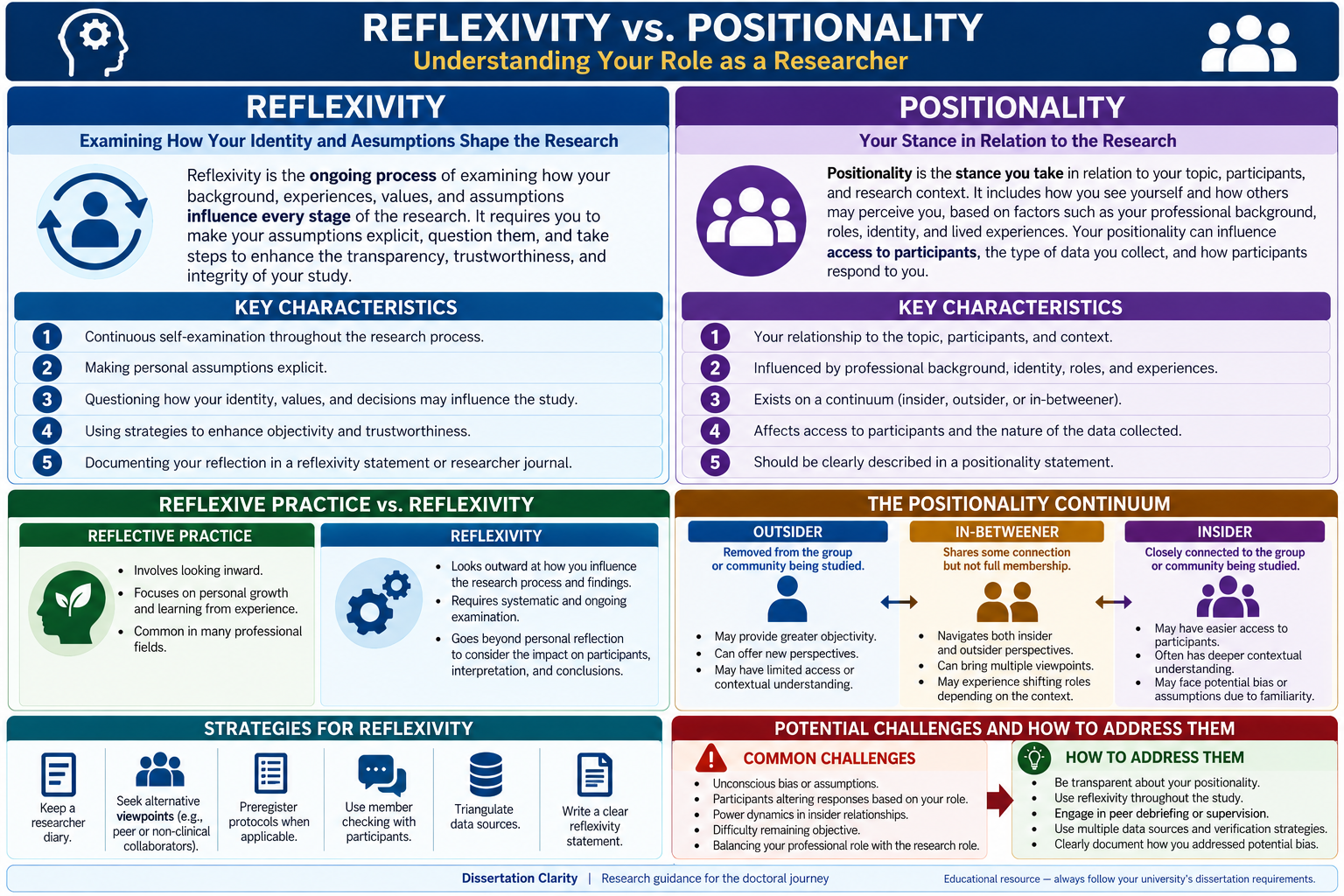
Distinguish these related qualitative research concepts and review practical strategies for transparency and trustworthiness.
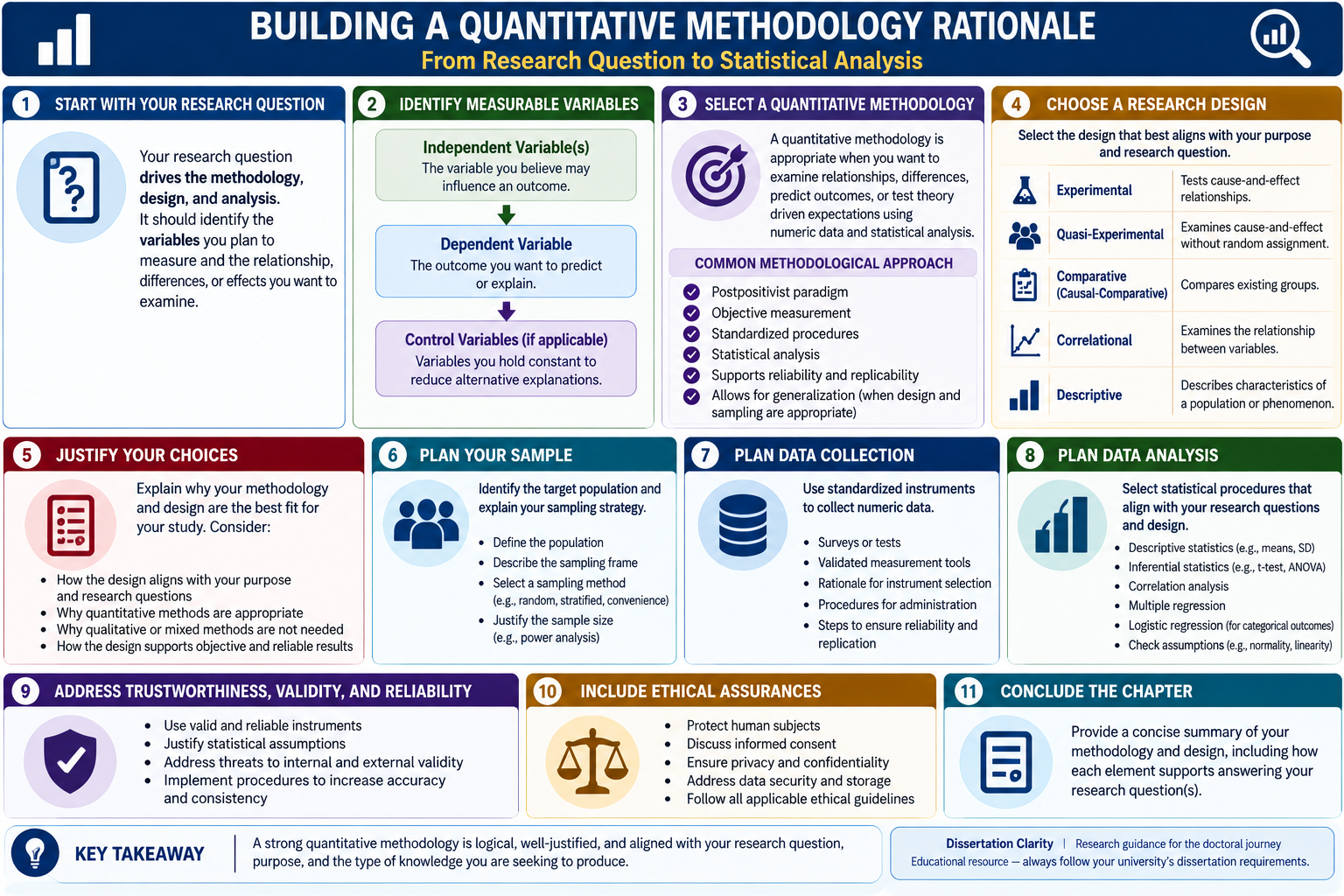
Trace the logic from the research question and measurable variables through design, sampling, analysis, validity, and ethics.
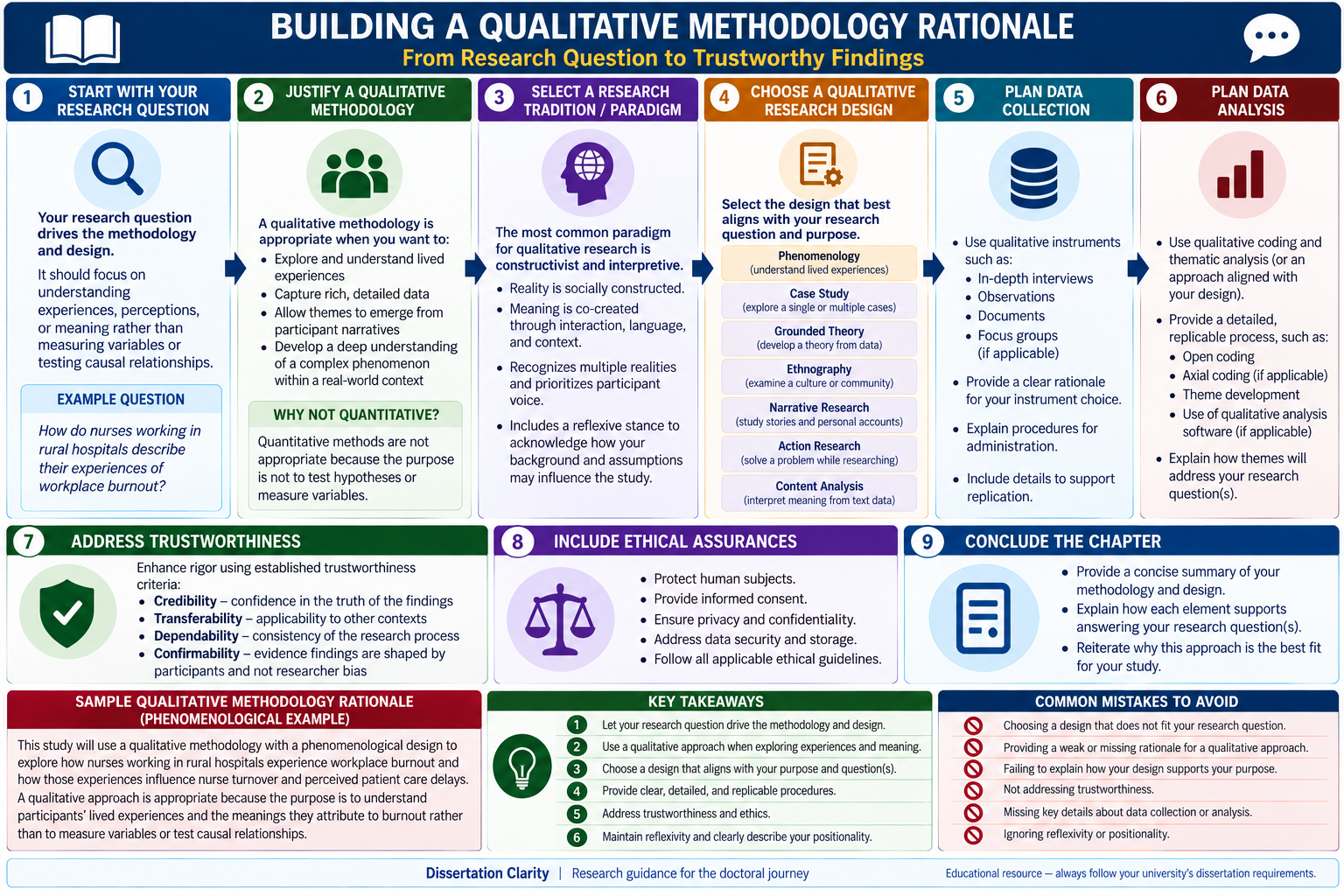
Move from an exploratory research question to design, data collection, analysis, trustworthiness, reflexivity, and ethics.
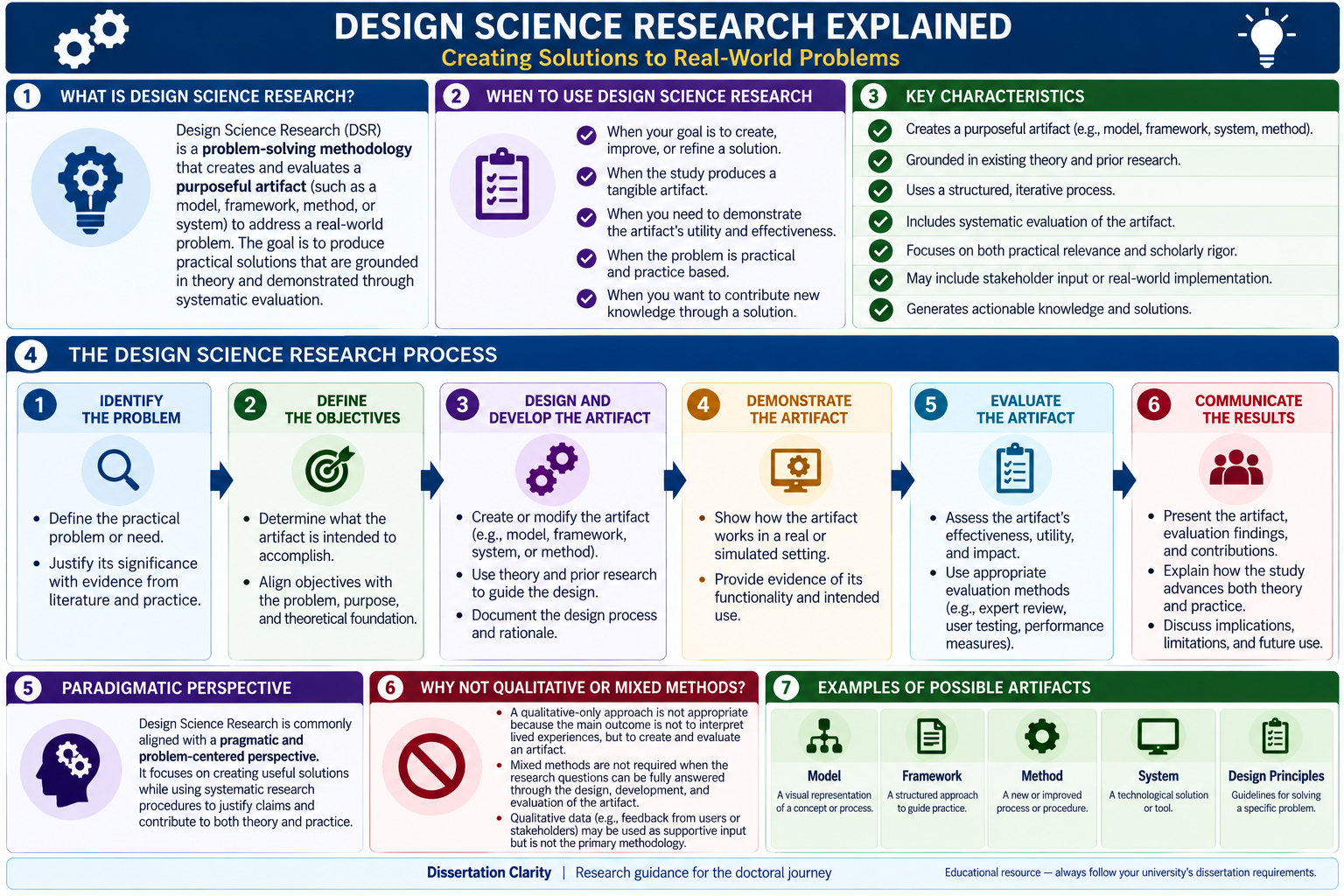
Follow the design science process from problem identification through artifact development, demonstration, evaluation, and communication.
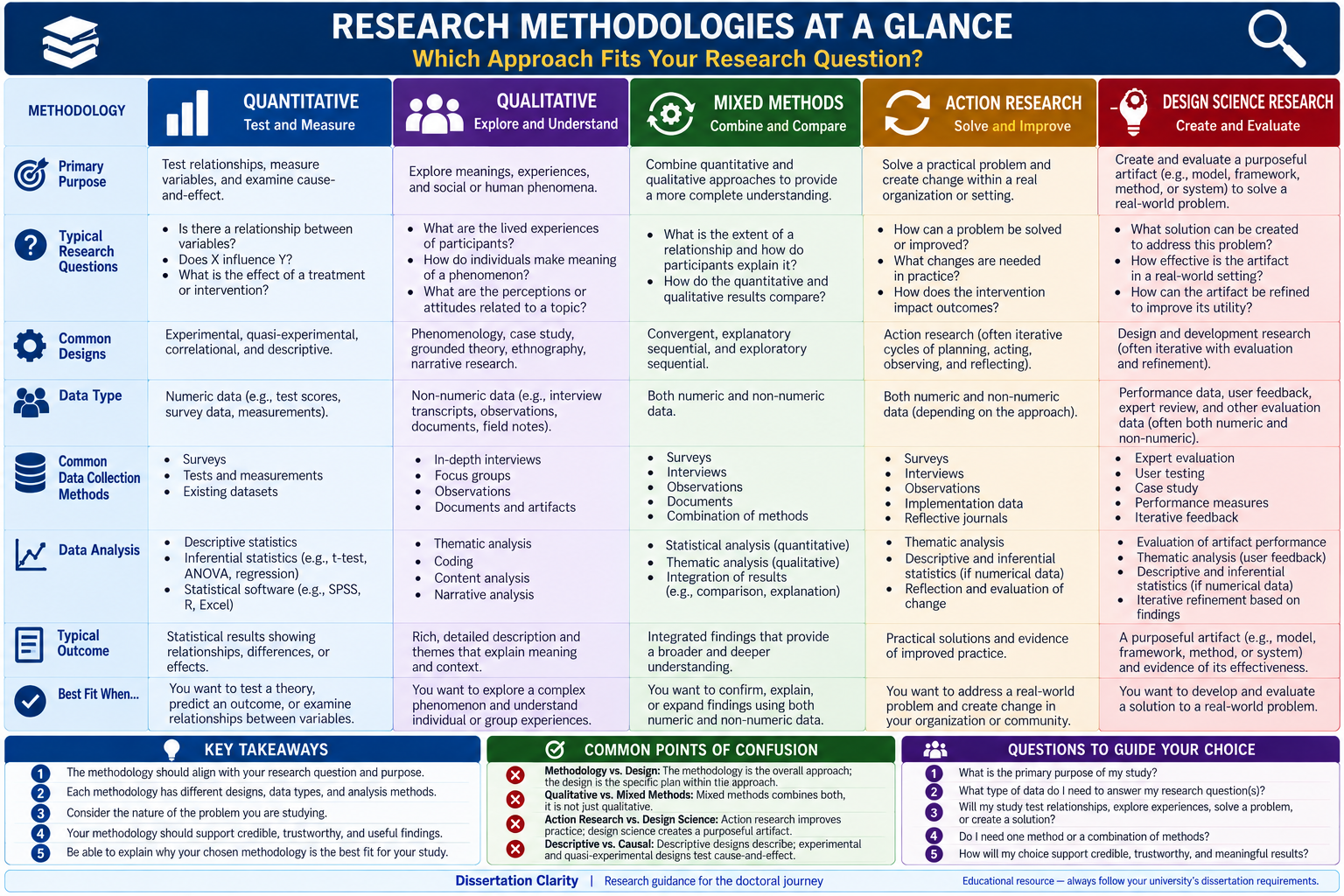
Compare quantitative, qualitative, mixed methods, action research, and design science in one reference guide.
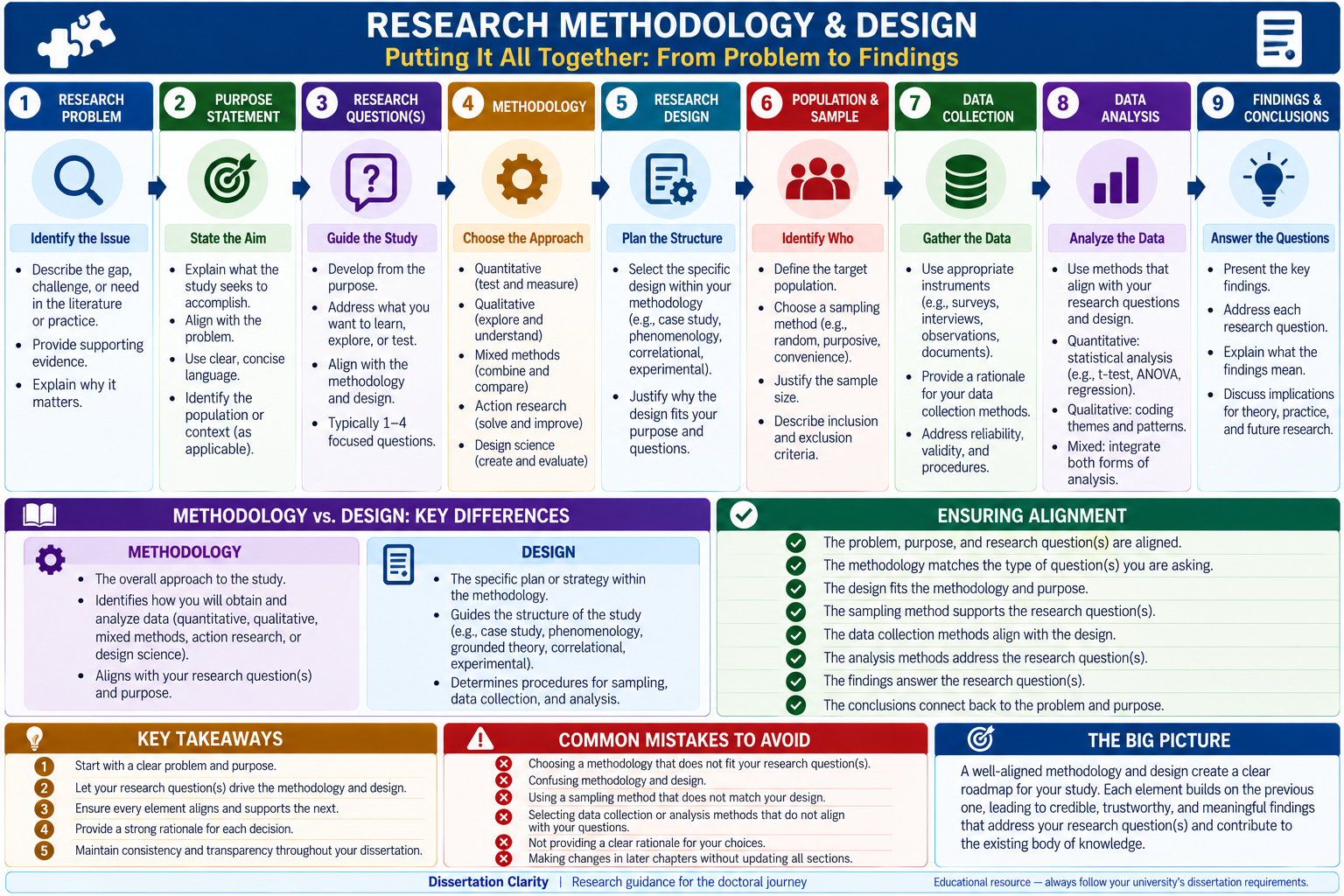
See the alignment chain from research problem and purpose through questions, methodology, design, data, findings, and conclusions.
Downloadable Tools
Use these editable tools to organize your own research decisions and preparation.
Map your problem, purpose, research questions, framework, methodology, data collection, and analysis in one place.
Download Word FileClarify the evidence you need, compare broad approaches, and build a defensible rationale for your methodology.
Download Word FileEvaluate candidate theoretical or conceptual frameworks and test how well each one fits your study.
Download Word FileTrack individual studies and synthesize themes, agreements, contradictions, gaps, and relevance to your research.
Download Excel FileReview Chapters 1–3 for alignment, synthesis, methodology, ethics, and submission readiness.
Download Word FilePractice your study overview, methodological rationale, common committee questions, and presentation readiness.
Download Word FileAcademic integrity
These resources support learning, planning, feedback, and independent research. They are not a substitute for committee approval and are not intended for ghostwriting, fabricated research, or misrepresentation of authorship.